Facing the Qibla, the direction of the Kaaba in Makkah, is one of the conditions of salah. At home you probably know which way to turn. In a hotel, an office, a park or a new city, it is easy to be unsure. Here are four reliable ways to find it, and a few things that commonly throw people off.
Why the Qibla is not always where a flat map suggests
The Earth is round, so the shortest path to Makkah follows a curve, not a straight line on a flat map. That is why the Qibla can feel surprising: from New York it points north-east, not south-east, and from London it points south-east.
The table below gives the Qibla direction as a compass bearing, measured clockwise from true north, for a few cities:
| City | Qibla direction | Roughly |
|---|---|---|
| Karachi | 268° | West |
| Lahore | 260° | West, slightly south |
| Islamabad | 256° | West, slightly south |
| Peshawar | 254° | West, slightly south |
| Delhi | 267° | West |
| Dubai | 258° | West, slightly south |
| London | 119° | South-east |
| New York | 58° | North-east |
| Toronto | 55° | North-east |
| Sydney | 278° | West, slightly north |
These are calculated from each city’s centre; within a city the angle barely changes.
1. Use a compass app
The quickest way is a Qibla compass on your phone. It uses your location to work out the angle and the phone’s compass to show you which way to turn. To get an accurate reading:
- Hold the phone flat, screen facing up, like a plate.
- Move away from metal and magnets: steel tables, cars, speakers, laptop cases and magnetic phone covers all bend the reading.
- Calibrate when asked. Most phones ask you to move them in a figure-eight; do it slowly a few times.
- Turn yourself, not the phone. Keep the phone steady in front of you and turn your whole body until it says you are facing the Qibla.
If two readings in the same spot disagree a lot, something nearby is disturbing the compass. Take a few steps and try again.
2. Use the angle and a normal compass
If you have a regular compass, find your city’s angle (like the table above), then:
- Hold the compass flat and let the needle settle on north.
- Turn the compass ring or count the degrees clockwise from north to your Qibla angle.
- Face that direction.
A compass points to magnetic north, which differs slightly from true north. In most of Pakistan the difference is only a degree or two, which makes no practical difference for prayer.
3. Use the sun on the two days it stands over Makkah
Twice a year, the sun passes directly over the Kaaba at midday in Makkah. At that moment, anywhere the sun is visible, your shadow points exactly away from the Qibla, so the Qibla is the direction of the sun.
These moments fall around 27–28 May at about 09:18 UTC and 15–16 July at about 09:27 UTC. In Pakistan that is about 2:18 pm and 2:27 pm local time. Stand a straight stick or pole upright on level ground at that time: the line from the tip of its shadow back to the stick points toward the Qibla. Mark it on the floor, and you have a reference that lasts.
4. Ask, or look for the local mihrab
In a masjid, the mihrab (the niche at the front) faces the Qibla. In many hotels in Muslim countries there is a small arrow on the ceiling or inside a drawer. When you are a guest, simply asking someone local is often the fastest answer of all.
If you are still unsure
Scholars teach that a person who makes a sincere effort to find the Qibla and prays in the direction they arrived at has done what is asked of them. Do your best with the tools you have; you are not expected to be perfect.
Finding it with Rafeeq
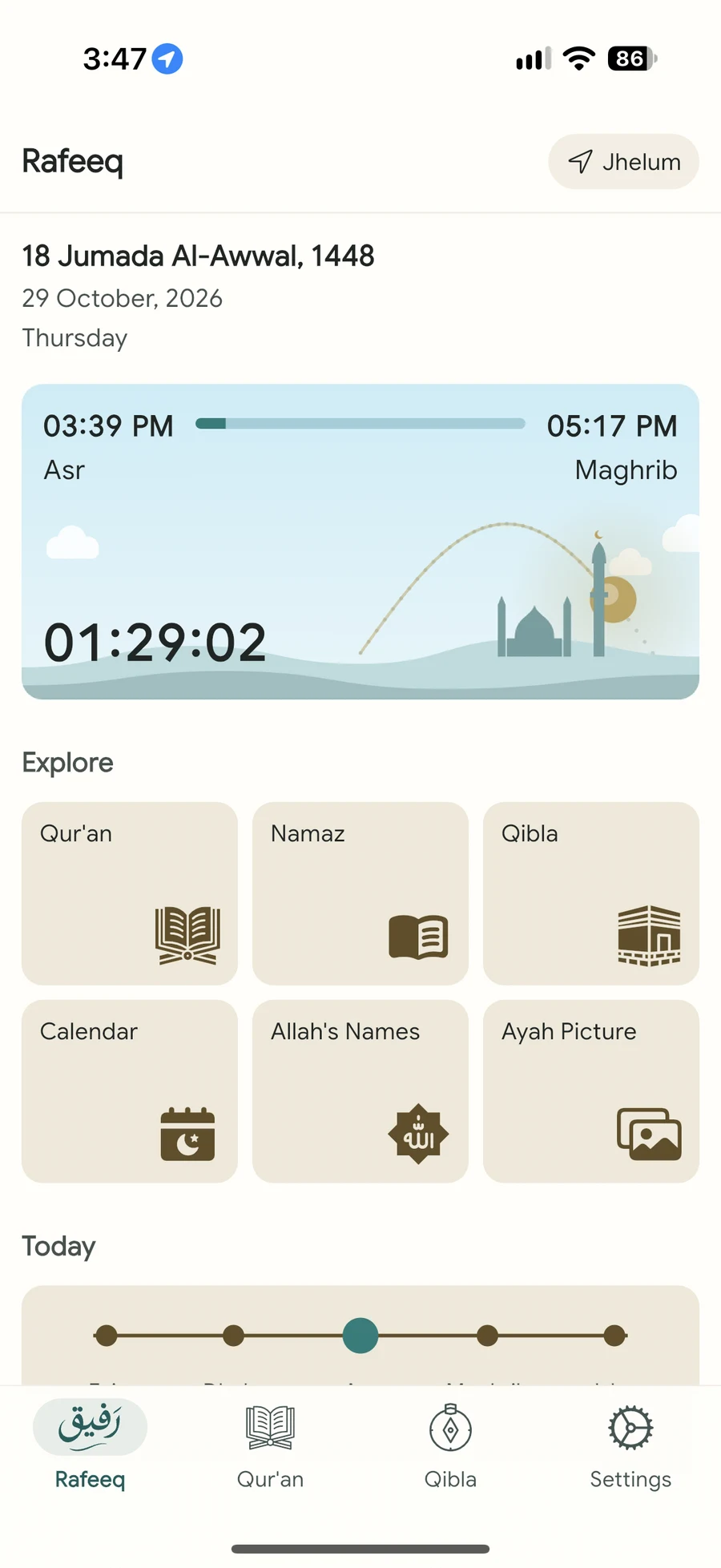
Rafeeq, our free Muslim companion app, has a real-time Qibla compass that points you to the Kaaba in Makkah and tells you exactly how far to turn, from wherever you are. Turn until the Kaaba sits at the top, and you are facing the Qibla.
The same app keeps the rest of your day close:
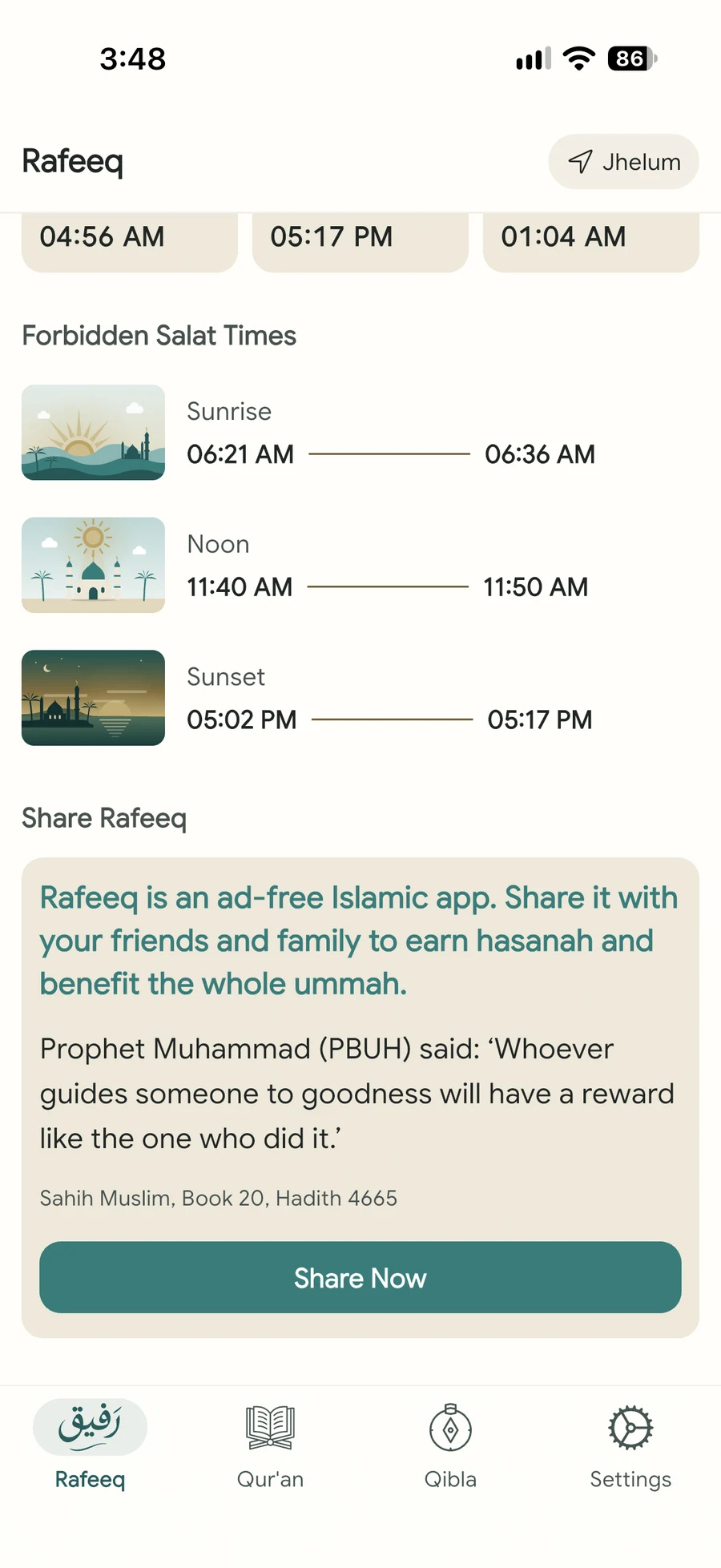
- Prayer times calculated on your phone for your location, with an adhan or a gentle reminder for each salah
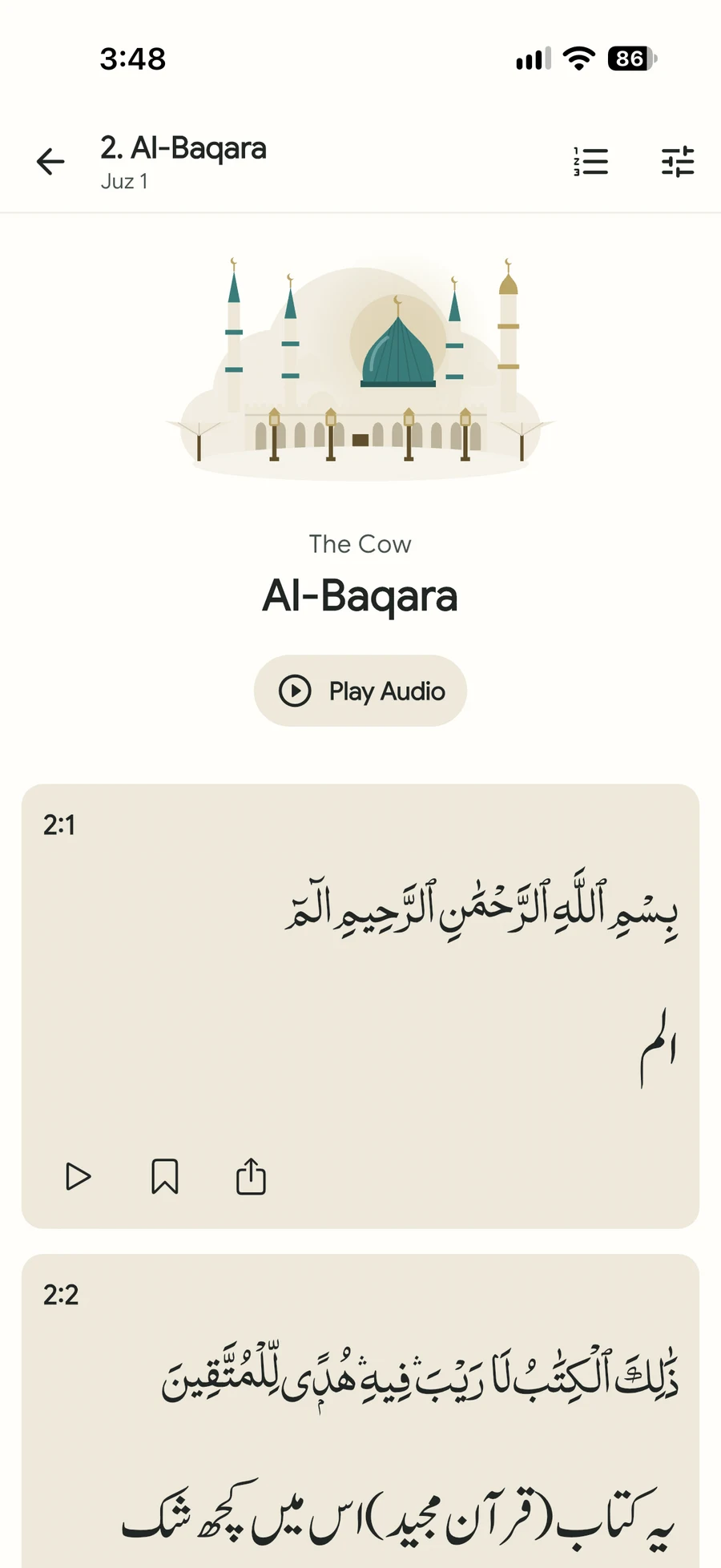
- The Qur’an with English or Urdu translation and recitations from renowned qaris
- Duas, a Namaz and Wudu guide, and the Hijri calendar
- English and Urdu, free, with no ads, and open source
Your location is used for prayer times and the Qibla. Find out more on rafeeq.teamsazen.com.